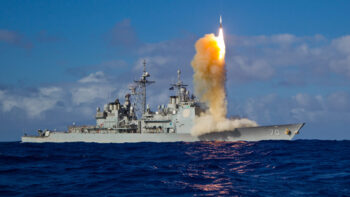
Pentagon, Raytheon ink up to $6.3 billion multi-year contract for SM-3 IB missiles
The contract comes months after DoD and Raytheon inked a framework agreement to boost production of the air defense munition.
The contract comes months after DoD and Raytheon inked a framework agreement to boost production of the air defense munition.
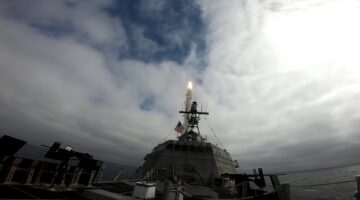
The deal covers at least five-years of production for an undisclosed number of missiles.


"Being able to tell the commander you don't need to do something is actually a pretty powerful message, as well."

"This industrial base among our allies is already very interconnected, so we cannot break it up," said Morten Brandtzæg.
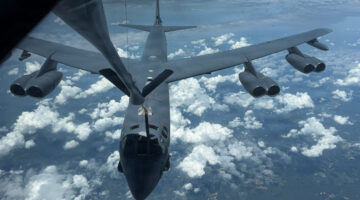
One contract worth up to $603 million was issued to RTX subsidiary Raytheon, while a second valued at roughly $163 million was issued to B-52 prime contractor Boeing.
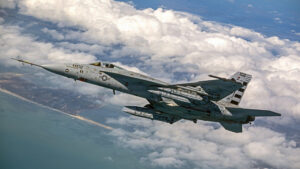
The Navy said that the missile is designed for 4th, 5th and 6th generation aircraft platforms.
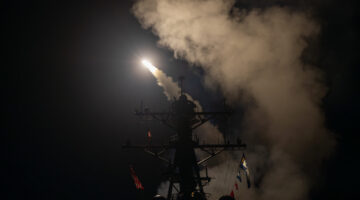
Over the past year, Pentagon leaders have leveraged multiyear contracts for critical munitions as an incentive to get defense primes to make larger investments in their production facilities and supply chain.

A commercial prototype in a sandbox is different from deploying AI across classified networks.

The seven-year framework deals cover key SM-3 components including avionics and ejector assemblies.

An Air Force office recently took over the sprawling M-code project, meant to give jam- and spoof-proof GPS receivers to potentially a million pieces of tech.

“Working with the United States government, we are working [...] to determine what is feasible and what is best for Ukraine,” said Raytheon’s Tom Laliberty.

The next set of 21 Tranche 1 Transport Layer birds are set to launch Thursday on a SpaceX Falcon 9, SDA Director Gurpartap "GP" Sandhoo told reporters.

AI is reshaping the Army’s approach to cyber, electronic warfare and command and control. At TechNet Augusta 2026, leaders outlined how they’re turning emerging technology into capabilities for the battlefield.

Kyiv has sought more Patriot interceptors to aid in its defense against Russian missiles and drones.

The new launcher incorporates modern infrared camera technology that allows for easier and faster target detection and is smaller and lighter than the legacy unit.
The contract covers the three Aussie frigates that will be built in Japan.
“We're making them put skin in the game … and we expect them to meet the ramp rates that they agree to. And, if they don't, there'll be penalties for them,” said Jules “Jay” Hurst, who is performing the duties of the Pentagon comptroller.